Recently many friends have come to us with all kinds of doubts about buying audio equipment. So we have gathered all the questions together and invited Ajie, our professional tech expert at Snail, to hold a consultation so we can answer them for everyone! — Snail Power
Q1: "Is there a relationship between speaker size and sound quality?"
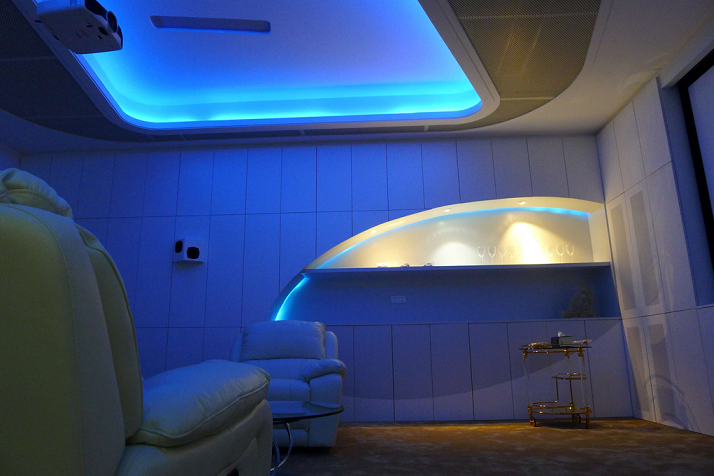
A: There is no direct relationship. Whether a speaker sounds good cannot be judged simply from any single aspect: driver size and how well the enclosure is designed, cabinet material, crossover board components, driver materials and many other factors all affect sound quality. As for size, this is the new era of the living-room cinema, and many brands are bringing out fresh products, working hard to create refined yet powerful home theater lines.
Q2: Is more speaker power always better?
A: Speaker power alone cannot tell you whether a speaker is good or bad, but in theory, the more power the better. This is because music (all music, that is) has a dynamic range; a passage with a wide dynamic range may need tens of times the power of a quiet passage. An amplifier with high power and ample power reserves can reproduce this more accurately. Of course, this is a simple illustration; there are other, more complex reasons, and in practice it depends on your own use and a sensible match.
Q3: What should you look out for when matching speakers with an amplifier?
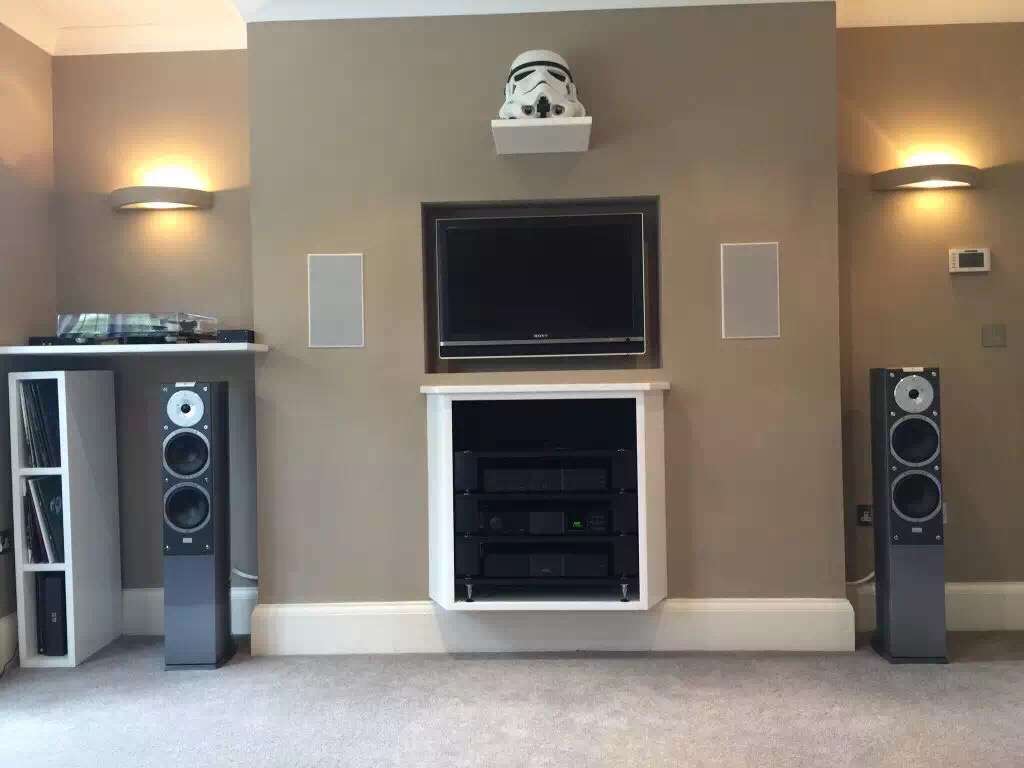
A: First, pay attention to power matching. In theory, the speaker's rated power should equal the amplifier's rated output power, so that the equipment works properly. Our advice here: better a big horse pulling a small cart than a small horse that cannot pull the cart at all. If conditions allow, choose a high-power amplifier and absolutely avoid a low-power one. As a rule, the amplifier's rated output power should be at least twice the speaker's power. A big horse pulling a small cart does waste some power unnecessarily, but a small horse pulling a big cart means the speakers do not get enough driving power, and the whole system cannot deliver its best sound.
Second is impedance matching. The amplifier's output impedance and the speaker's input impedance should likewise match. A slight difference between the two will not noticeably affect sound quality, only the amplifier's output power, but one point must be noted: if the speaker's input impedance is much lower than the amplifier's output impedance, distortion will increase markedly and, in serious cases, the amplifier can be damaged. So it is best to choose components whose impedance matches.
Finally, damping factor matching. Damping is a measure of how the internal resistance of the amplifier's output stage damps the speaker. If the damping factor is too high, the sound from the speaker becomes dry and unrefined; if it is too low, the sound easily feels as though it is stuck together. So when configuring an amplifier, note that a solid-state amplifier's damping factor should be kept between 30 and 40, while a tube amplifier, whose internal resistance is inherently high, must not exceed 10.
Q4: Why does noise suddenly appear during use?
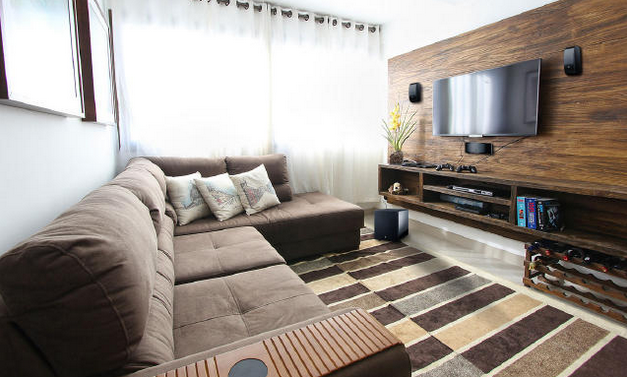
A: Generally speaking, most speakers are active, and there is bound to be an amplifier inside, so noise is unavoidable. By source, the noise from an active speaker can be roughly divided into electromagnetic interference, mechanical noise and thermal noise.
Electromagnetic interference can be divided mainly into power transformer interference and stray electromagnetic wave interference. In everyday situations, power transformer interference is caused by magnetic flux leakage from a multimedia speaker's power supply. Where conditions allow, fitting a shield over the transformer is very effective, blocking the leakage flux as much as possible, and the shield must be made of ferrous material. We should choose well-known brands and solidly built products where possible; using an external transformer is another good solution.
Stray electromagnetic wave interference is fairly common: speaker cables, crossovers, wireless devices and even the computer tower can all become sources of interference. Keep the main speakers as far from the computer tower as conditions allow, and reduce the number of wireless devices nearby.
Besides interference caused by the equipment above, drivers, sources and many other things can also have an effect.
Q5: What are the principles behind speaker placement?
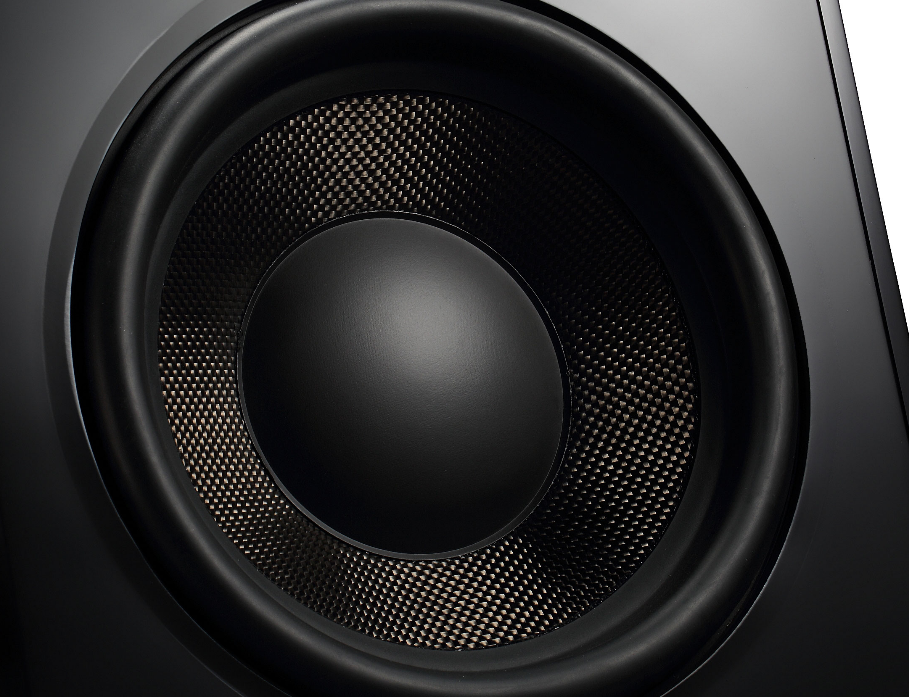
A: A typical home theater system is a 5.1 package. 5.1 means two main speakers + two surround speakers + one center speaker + one subwoofer. Their placement also matters a great deal.
Placing the center channel speaker The front center speaker is generally placed as close as possible to the center of the screen image. The center channel speaker has the greatest influence on the sound quality of movie dialogue. To ensure that dialogue is accurately located at the center of the screen and stays clear, you should use a dedicated speaker designed for the center channel, and not substitute an ordinary bookshelf speaker or the speakers built into a TV.
Placing the left and right main speakers The placement of these two speakers is related to the position of the center channel speaker. To ensure smooth left-to-right movement of the sonic image, they should be placed on either side of the center channel speaker, and all three speakers should be equidistant from the prime listening position in front of the screen. Generally, the center speaker should be set back a certain distance relative to the left and right speakers, until the two sound fields blend completely and together create a truly unified sonic image. The amount of setback depends on the room size, the listening position and the speakers used, and can be determined by experiment.
Placing the surround channel speakers Surround speaker placement should vary according to the listening environment (the room) and the type of surround speakers. For the left and right surround channels, the speakers' diffusion should take priority over directionality, which helps create a rich surround atmosphere. When placing dipole speakers, two factors must be considered above all: resonance and self-cancellation. The best position for anti-resonance is at 20% of the room height from the ceiling (or floor) - for example, if the room is 2.5 m high, the best position is 50 cm from the top and bottom. To make the frequency response smoother, you can add a new device called a low-frequency "trap" (which absorbs low-frequency energy) to eliminate the reflections that cause the sound to decay on its own.
Placing the subwoofer The subwoofer is usually placed near a front corner, preferably at least 1 m from the corner, which reduces interference from standing waves. You can also place the subwoofer on either side of the prime listening position at a suitable distance, because the human ear is not very sensitive to the direction of deep bass coming from the sides, so in this case the subwoofer will not disturb the original sonic image of the three front channels. Of course, the best placement should still be determined by experiment.
Well, that is all for this round of Q&A. If you still have questions, leave a comment below the article, or follow the official WeChat or Weibo of our Snail Power audio: Snail Power, and interact with us! Snail Power, build your own dedicated cinema! — Snail Power