The subwoofer is a prized piece of gear for many audio and video enthusiasts, especially younger hi-fi fans, and it is an indispensable part of any home audio system. So how much do you really know about it? Most people have probably only heard of it without knowing much more, so today we have put together some subwoofer knowledge to help you understand it better.
Compiled and edited by Snail Power audio
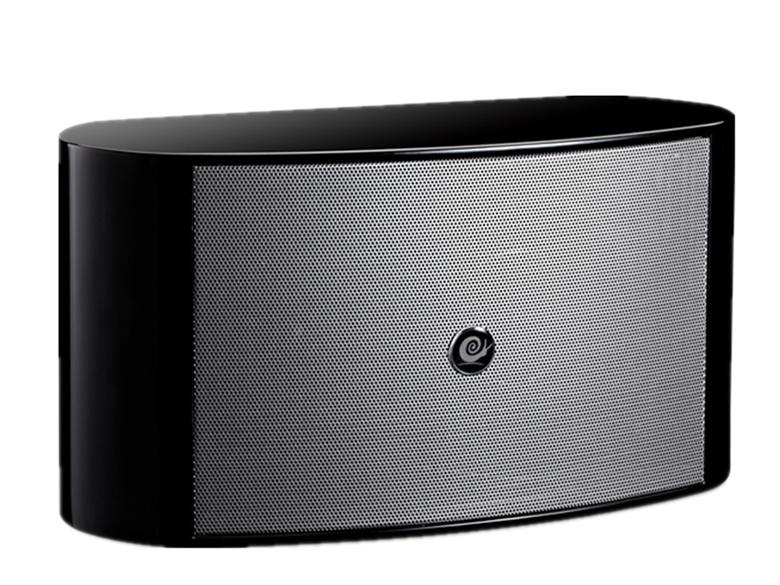
Uses of the subwoofer:
As a member of the home theater system, it reproduces the low-frequency effects in a movie soundtrack, making up for the low-frequency weight the main speakers cannot provide, or the low and infra-low frequencies they simply cannot reach.
How subwoofers are classified:
If classified by whether a built-in amplifier is used, there are two types: active subwoofers and passive subwoofers. If classified by enclosure design, they fall roughly into bass reflex, bandpass and transmission line designs. If classified by the direction of radiation, there are front-firing, rear-firing, down-firing, up-firing and left/right side-firing types. If classified by how the drivers are configured, there is the push-pull type made up of two speakers, the in-phase type made up of two or three speakers, and the in-phase type made up of one driver plus a passive radiator. The most ideal subwoofer has, in addition to a built-in amplifier, a dedicated bass equalization circuit that can attenuate the room's low-mid standing waves to some degree, giving the low-frequency range below 100 Hz or 80 Hz a comparatively flat frequency response curve. Of course, subwoofers with this kind of design are quite expensive.
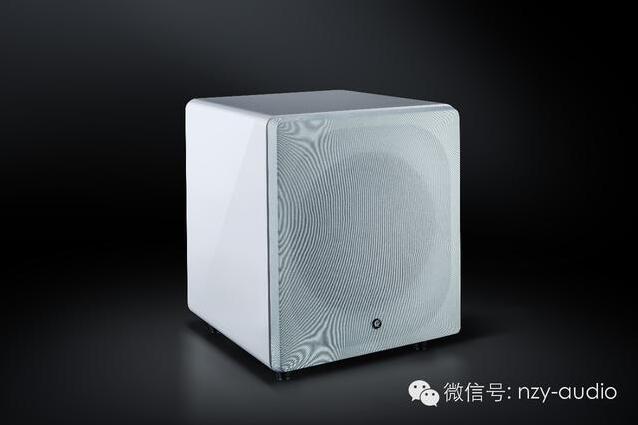
Sealed subwoofers:
The enclosure itself is sealed, with no port or gap connecting it to the outside, and the woofer can be mounted facing forward, backward, left, right, up or down. This kind of enclosure is the simplest to manufacture and easily meets quality requirements; transient response is fast, it can handle greater power, and the cabinet can also be made fairly small.
Bass reflex subwoofers:
The enclosure has one or more bass reflex ports, so that the front wave of the woofer inside the cabinet can travel out through the ports and mix with the driver's forward wave, thereby increasing the amount of bass. Distortion is relatively low and it can handle more amplifier power. Compared with a sealed enclosure, a bass reflex design can reach a lower cutoff frequency. Its transient response, however, is not as good as that of a sealed enclosure.
Bandpass subwoofers:
A bandpass enclosure design usually consists of two separate chambers, one hidden inside and one connected to the outside through a bass reflex port. The hidden chamber is sealed. The woofer is mounted inside this sealed chamber, with its diaphragm facing the other chamber. The woofer cannot be seen from the outside of the cabinet. When the woofer begins to move, it drives the air in the outer chamber through the bass reflex port, forming an acoustic filter that applies fourth-order filtering to a certain frequency band. Its power handling is the highest of any enclosure design. Its transient response is second only to the sealed design. This design costs too much and is therefore relatively rare.
Transmission line subwoofers:
Inside there must be a sealed duct that tapers from large to small: the large end connects to the back of the woofer and receives the driver's rear wave, while the small end is the outlet. The duct must be at least one quarter of the wavelength of the lowest cutoff frequency in length, and suitable sound-absorbing material must be fitted to its inner walls. The duct uses the woofer's rear wave to extend the low-frequency cutoff downward and achieve a lower frequency response, so the bass can be pushed even lower. The cabinet of a transmission line subwoofer is also the most expensive to manufacture, which is why this design is even rarer.
Passive subwoofers, that is, unpowered subwoofers:
In the early days, subwoofers had no dedicated drive amplifier inside, only a passive crossover network handling the frequency division; such subwoofers were called passive subwoofers, also known as unpowered subwoofers. They have no driving capability of their own and must be driven by an external amplifier. The music signal is taken from the amplifier's output terminals, and the subwoofer also provides its own set of signal output terminals to pass the frequency-divided music signal on to the main speakers. Because the main speakers and the subwoofer are driven by the same amplifier, the load on the amplifier increases and its driving capability is spread thin. Such subwoofers are now very rare, since they are a lot of effort for little reward.
Active subwoofers, that is, powered subwoofers:
With the establishment of multichannel surround systems for home theater, subwoofers must have a built-in amplifier. This lets them take a low-level music signal from the subwoofer output of an AV receiver. In addition, active subwoofers generally also provide separate high-level input and output terminals, meaning they can be connected using speaker cable.
In a home theater, a subwoofer cannot be connected with speaker cable, because the subwoofer signal output of either an AV receiver or a decoding preamplifier is delivered through low-level RCA or CLR terminals, not through speaker terminals. If you add a subwoofer to a two-channel system, however, you can feed the music signal into the subwoofer through the preamplifier's second set of outputs or through the power amplifier.
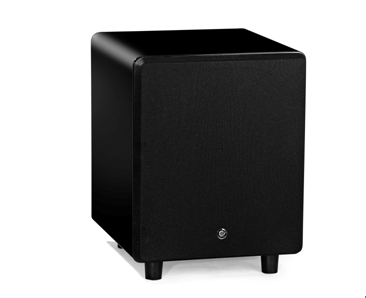
What amplification class does a subwoofer's built-in amplifier use?
The vast majority of built-in amplifiers in active subwoofers use Class D amplification. This is because it is extremely efficient, does not generate heat, and can easily deliver several hundred watts or even over a thousand watts of output, all at low cost. Moreover, the bandwidth of a woofer is roughly between 20 Hz and 150 Hz, so Class D's higher distortion and its weakness in the mid and high frequencies are of no great consequence in subwoofer use.
A few high-end subwoofers insist on Class AB instead. The heatsink on the back of such subwoofers is bound to be quite large: the heatsink needed for several hundred watts of output is as big as that of a several-hundred-watt amplifier.
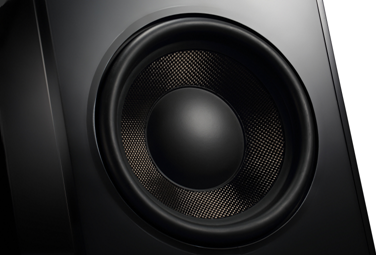
The input and output terminals a subwoofer must have:
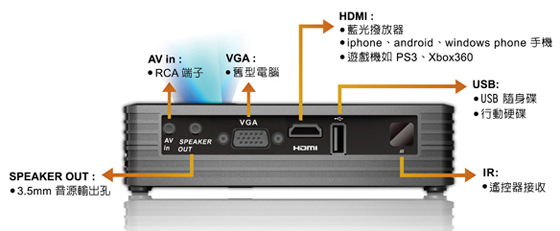
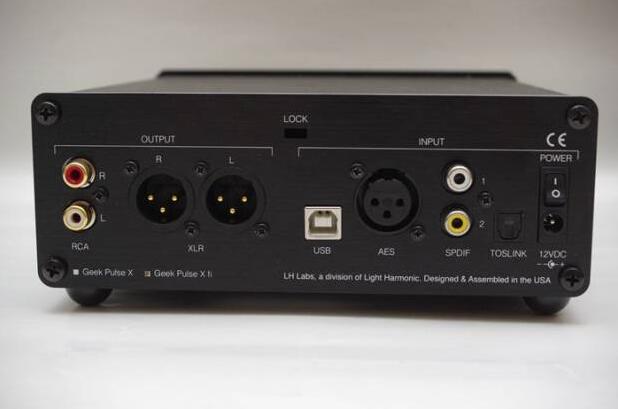
For an active subwoofer, the essentials include low-level output and input terminals. Some also provide a Link Out for connecting a second subwoofer, plus high-level speaker cable input and output terminals. Then there must be crossover frequency adjustment, volume adjustment, and phase adjustment or phase switching. A few subwoofers also have a high-pass output. A high-pass output filters out the frequencies below the crossover point and lets those above it pass; a low-pass output does the opposite, letting the frequencies below the crossover point pass.
Phase adjustment and phase switching:
Phase adjustment is continuous or stepped adjustment from 0 to 270 degrees, while phase switching is simply switching between two settings, 0 degrees or 180 degrees. Why is phase adjustment needed? Put simply, when the low frequencies produced by the subwoofer driver mix with the low frequencies produced by the other speakers, if the two are in phase or nearly so, the total amount of bass is the sum of the two.
Conversely, if the two are out of phase or nearly so, the total amount of bass is reduced. In theory, when the subwoofer, the main speakers and the center speaker are on the same line, the subwoofer's low-frequency phase should be the same as, or close to, that of the main and center speakers. In practice, many factors prevent you from placing the subwoofer on the same line as the main and center speakers, and it is more often put in a corner or at the side. In that case the phase of the sound coming from the subwoofer may differ from that of the other channels, and phase adjustment lets you correct it.
A subwoofer with 0/180-degree switching is best placed in a corner or between the main speakers, as close as possible to the main speakers or the center channel. A subwoofer with stepless or stepped 0-270 degree phase adjustment can be placed more flexibly and offers more adjustment options. How do you know the phase is set correctly? Just listen and pick the setting with the richest bass. A pink noise test disc is excellent test material: test each frequency band from 20 Hz to 150 Hz, or listen to a single frequency. Careful comparison will reveal the richest band.
Placing the subwoofer:
Like the main speakers, the subwoofer also requires attention to placement, because the subwoofer driver is affected by reflections from nearby walls and the floor, producing reinforcement (in phase) at certain frequencies and cancellation (out of phase) at others. In addition, the low-mid and low-frequency standing waves that are unavoidable in any listening room also affect how the subwoofer driver performs.
So when you choose where to place the subwoofer, the first thing to consider is: do I want to use wall reinforcement of low frequencies to increase the subwoofer driver's output? The second is: will the standing waves that already exist in the listening room (caused by the left and right channel drivers) reinforce (in phase) or cancel (out of phase) the subwoofer's sound waves? In other words, when placing the subwoofer you must consider not only the in-phase and out-of-phase interaction between the subwoofer and the left and right channels, but also the in-phase and out-of-phase interaction between the subwoofer itself and the adjacent floor and walls.
The in-phase and out-of-phase issues between the subwoofer and the left and right channels can be solved with the phase adjustment provided on the subwoofer. As for the in-phase and out-of-phase issues between the subwoofer itself and the walls and floor, apart from modifying the room, they can only be dealt with through the subwoofer's placement.
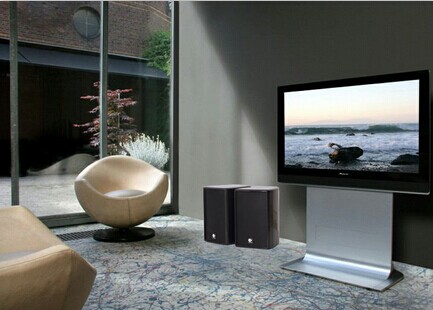
Simple placement actually involves many complex considerations. The best way to solve this problem is to keep the sound waves reflected by nearby walls and the sound waves reproduced by the subwoofer driver at the same phase, that is, in phase with each other. To keep all four sound waves - the subwoofer driver, the floor, the side walls and the rear wall - in phase, the surest method is to keep the reflected waves and the subwoofer driver's waves within 90 degrees of phase.